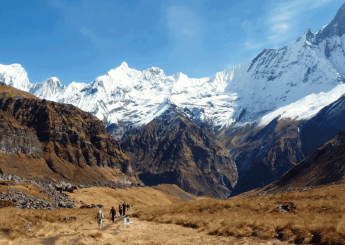
Peak Climbing in Nepal: The Ultimate Guide for First-Time Climbers
November 01, 2026
Peak climbing in Nepal offers you a chance to stand above 6,000 meters without needing advanced mountaineering skills, since the Nepal Mountaineering Association classifies 27 such routes as trekking peaks.
While Island Peak climbing in Nepal and Lobuche East Peak climbing in Nepal attract climbers seeking fixed ropes and steeper terrain, options like three peak climbing in Nepal appeal to those building endurance across multiple summits. The right peak climbing season in Nepal, whether you aim for 2026 or beyond, significantly affects your success and safety on the mountain.
What First-Time Climbers Should Know About Peak Climbing in Nepal
Stepping from trekking into peak climbing in Nepal means stepping into a different kind of challenge altogether, one where fitness alone won't get you to the top.
How peak climbing differs from trekking
A beginner peak climber is not the same as a beginner trekker. Before you rope up for a summit attempt, you should have already completed at least one multi-day high-altitude trek above 4,500 meters, built solid fitness and altitude tolerance, and gained some familiarity with cold-weather hiking. On top of that, you need the willingness to pick up technical skills such as crampon use, ice ax handling, and rope work, skills a standard trek never asks of you.
The Nepal Mountaineering Association sorts climbable summits into two categories. Group A covers taller, more technical expedition peaks that aren't suitable for first-timers, while Group B trekking peaks sit mostly under 7,000 meters and offer a realistic entry point into mountaineering.
Of the more than 1,300 recognized peaks above 6,000 meters in Nepal, only 491 have been legally opened for climbing, and trekking peaks form the accessible slice of that list. That distinction matters because it shapes everything from your permit paperwork to the equipment you'll carry on summit day.
Why a trekking peak is not always an easy climb
Don't let the word "trekking" fool you. These mountains add layers of difficulty a standard hike never includes: altitude above 6,000 meters for most routes, technical terrain involving glaciers, steep snow, and fixed ropes, and summit days stretching 12 to 16 hours in conditions far harsher than anything on a typical trail. Each layer is manageable on its own for a well-prepared climber, but stacked together without prior altitude experience, they can overwhelm even fit trekkers.
Island Peak climbing in Nepal illustrates this well. The final push crosses a glacier and tackles a headwall of steep ice angled between 45 and 50 degrees, requiring fixed ropes and jumar technique at 5,800 meters, where oxygen levels sit at roughly half of sea-level values.
Lobuche East Peak climbing in Nepal pushes the technical bar even further, often considered more demanding than Island Peak despite following a similar approach along the Everest Base Camp trail. If you're weighing options like three peak climbing in Nepal, where multiple summits are combined into one itinerary, understand that each peak brings its own blend of technical and physical demands, and fatigue compounds across the trip rather than resetting between climbs.
How altitude, terrain, and weather affect difficulty
Oxygen availability drops fast as you climb. At 3,500 meters, you're breathing roughly 65% of the oxygen available at sea level, and by 5,500 meters that figure falls to about 50%.
Altitude sickness symptoms can begin as low as 2,500 meters, risk climbs sharply above 3,500 meters, and nearly everyone needs deliberate acclimatization above 4,500 meters. These numbers aren't abstract. They explain why summit day, which typically starts around 2 or 3 am, feels so much harder than anything you've trained for at home.
Terrain adds its own layer. Expect glacier walking, ice moraines, and crevasses that demand careful footing and route-finding, even on routes the NMA classifies as non-technical. Weather compounds both factors. Peak climbing season in Nepal centers on spring and autumn, when skies clear and snow conditions stabilize, making these the windows most guides recommend for first attempts. Outside those months, shifting snowpack and unpredictable storms raise the stakes considerably.
If you're mapping out peak climbing in Nepal 2026, building your plan around these three variables, altitude, terrain, and season, will do more for your odds of summiting than any amount of extra gym time. The mountain doesn't negotiate on oxygen or weather, so your preparation has to meet it on its own terms.
Best Peaks in Nepal for Your First Climb
Picking the right mountain matters as much as training for it. Nepal's trekking peaks range widely in altitude, technical demand, and crowding, so your first summit should match your fitness, timeline, and appetite for exposure.
Yala Peak: A lower-altitude option in Langtang
Yala Peak sits at 5,732 meters in the Langtang region, and the Nepal government no longer requires a special climbing permit for it since it falls below the 5,800-meter threshold.
The route runs through Kyanjin Gompa, where climbers acclimatize before pushing to Yala Kharka base camp at 4,600 meters. From there, the summit push covers roughly 9 kilometers and takes 5 to 6 hours, mostly scrambling over rock with a southeast face ascent that rarely needs fixed ropes, though crampons help on icier sections.
A typical expedition runs about 14 days, with only 2 of those spent actually climbing. The mountain reports a success rate above 95%, and on a clear day, you'll spot Shishapangma across the border in Tibet from the summit.
Mera Peak: Less technical climbing but demanding altitude
Mera Peak, at 6,476 meters, holds the title of highest trekking peak in Nepal and offers views of five 8,000-meter giants, including Everest, Lhotse, Cho Oyu, Makalu, and Kanchenjunga. The climb itself asks for little technical skill, but altitude is where climbers run into trouble.
A 12-day Lukla-to-Lukla itinerary doesn't leave enough time to acclimatize, and several climbers lose their lives each year attempting rushed schedules. Mera has two summits: an easier central point at 6,461 meters with a steep final 20 meters, and the true north summit at 6,476 meters, reached either by a traverse or a steeper westerly line, both crossing crevassed terrain.
Routing through Namche Bazaar first, or taking the Pangum approach, gives your body more time to adjust before the final push.
Island Peak Climbing in Nepal: Steep snow and fixed ropes
Island Peak climbing in Nepal, at 6,189 meters, carries an Alpine Grade PD with a technical rating of IFAS II, and climbers face oxygen levels around 45% of sea-level values along with temperatures dropping near minus 25 degrees Celsius.
The defining obstacle is a headwall of roughly 200 meters at a 45-degree angle, fixed with ropes that guide climbers through steep ice and snow before a narrow summit ridge with drop-offs on both sides. During peak climbing season in Nepal, especially October and November, as many as 80 people summit on a single day.
The mountain is also losing ice cover year by year, which makes conditions more hazardous and leaves base camp and high camps short on water. Chukhung lodges rent out boots, crampons, ice axes, and harnesses if you'd rather not carry gear the whole way.
Lobuche East Peak Climbing in Nepal: A more technical choice
Lobuche East Peak climbing in Nepal, at 6,119 meters, ranks as the hardest of the standard trekking peaks attempted by commercial groups. Many climbers stop at the summit ridge rather than pushing to the true or false summit, both guarded by a knife-edge approach.
While the overall slope angle stays moderate, sections of broken seracs demand two ice axes, front-pointing technique, and careful belaying, placing it a notch above Island Peak in technical difficulty.
Pisang Peak and Tent Peak: Options in the Annapurna region
In the Annapurna region, Pisang Peak (6,091 meters) carries a PD+ alpine grade, with summit slopes reaching 45 to 50 degrees and fixed ropes requiring jumar skills.
Guides generally steer first-timers toward Mera or Lobuche before attempting Pisang. Tent Peak, or Tharpu Chuli, at 5,663 meters, sits inside the Annapurna Sanctuary and carries an NMA grade of 2C, involving occasional rope and crampon use on a shorter, lower-altitude itinerary. Its base camp approach, however, crosses exposed moraine prone to rockfall.
Chulu Far East, at roughly 6,060 meters, rounds out the Annapurna options as a more straightforward alternative for those building toward three peak climbing in Nepal across multiple seasons.
When to Climb and How Long to Allow
Timing can make or break your summit attempt, and it matters just as much as the peak you choose. Picking the right window determines whether you climb through stable snow and clear skies or get stuck waiting out storms at high camp.
Peak climbing season in Nepal: Spring vs autumn
Spring (March to May) and autumn (September to November) dominate the peak climbing season in Nepal for good reason. During spring, temperatures at high camp range from minus 10°C to 5°C, snow consolidates into stable, predictable footing, and clear-sky probability runs 70 to 80%.
April stands out with a 91% summit success rate, trailing only by March's 78% and May's 84%. Autumn edges ahead on visibility, with clear skies hitting 80 to 90% and October alone posting a 94% success rate, the highest of any month, followed by September at 82% and November at 87%.
Flight reliability tracks closely with these patterns too: Lukla departures run 80 to 90% on time across both spring and autumn. Interestingly, the ideal window also shifts by region. Eastern Himalayan routes favor spring, while western objectives tend to climb better in autumn, so your choice of peak should inform your choice of month.
Why winter and monsoon climbs are harder for beginners
Winter (December to February) tests even seasoned climbers. High camp temperatures drop to minus 20°C to minus 25°C, with summit mornings plunging to minus 20°C to minus 30°C once windchill factors in.
Combine that with an overall success rate of just 60 to 70%, largely due to extreme cold, and winter stops looking like a beginner-friendly option. Many lodges close entirely during these months, forcing teams to camp and arrange logistics well in advance, and rescue helicopters face operational limits in the cold.
Monsoon (June to August) brings a different set of problems: daily rain, poor visibility, and avalanche-prone wet snow push success rates down to 50 to 60%, while itineraries often stretch 3 to 5 extra days to work around weather holds. For a first attempt at island peak climbing in Nepal or any other trekking summit, stick to the two primary windows and save winter or monsoon for later, once you've built experience.
Building an itinerary with time to acclimatize
Rushing the schedule is the single biggest mistake beginners make. Mera Peak, for instance, needs a minimum of 18 days to follow a safe acclimatization protocol, while some operators push 14 to 15 day versions that raise the risk of altitude illness substantially, particularly for climbers without recent high-altitude exposure.
Similarly, island peak climbing in Nepal typically runs 16 to 20 days, and Mera Peak itineraries need around 18 days simply because the approach trek is longer. The underlying rule across every route is the same: ascend no more than 500 meters of sleeping elevation per day, and follow the climb-high-sleep-low principle whenever the terrain allows.
That discipline pays off directly. Proper acclimatization cuts acute mountain sickness incidence from roughly 30% down to under 5%, according to Himalayan Rescue Association data. If you're weighing three peak climbing in Nepal across one trip, build in acclimatization days for every segment rather than relying on fitness carried over from the previous summit.
Adding weather days and planning travel to the trailhead
Even a well-built itinerary needs slack. A realistic summit push requires a 2 to 3 day weather window: one day to move to high camp, one for the summit push, and one as a descent buffer.
On top of that, build 2 to 3 contingency days into spring and autumn plans, extend that to extra days during monsoon or winter, and consider alternate access through Phaplu or Salleri if you want to skip Lukla's flight risk entirely, though that route adds 4 to 5 trekking days.
Planning peak climbing in Nepal 2026 around these buffers, including 4 to 5 spare days in Kathmandu after the trek, keeps a single bad-weather day from costing you your international flight home.
How to Train and Pack for Your First Peak
Training separates climbers who summit from those who turn back at high camp. Physical preparation does the heavy lifting here, since no gym session fully replicates thin air, but a structured plan narrows that gap considerably.
Build endurance with uphill hikes and strength training
Walking, not running, builds the specific muscle endurance peak climbing demands, since uphill walking with a pack recruits different muscles than running ever will. An eight-week plan for Mera Peak starts with 8 to 10 km walks three times weekly, then layers in a 5 kg daypack by week three, building toward 18 to 20 km days with 600+ meters of elevation gain by week six.
Peak week pushes a 22+ km walk, followed by a 40% volume taper before departure. A useful readiness check: if you can walk 20 km on hilly terrain with a 7 kg pack and still eat dinner and walk again the next morning, you're ready; if you're wiped out with knee pain, add two to four more weeks. Strength work matters just as much.
Three cardio sessions weekly, building from 30 to 60 minutes, paired with squats, lunges, step-ups, and calf raises, prepares your legs for both ascents and the eccentric strain of descents. Longest training hikes should exceed your trek's maximum daily hiking time, with pack weight built up to 20% of body weight.
Learn crampon, ice ax, and rope skills before departure
For non-technical peaks like Mera, guides teach crampon technique and basic rope skills at high camp in roughly 30 minutes, practiced on a gentle slope before the real climb. Technical peaks ask for more.
A 16-week Island Peak plan dedicates weeks 5 through 8 to a certified mountaineering course covering ice ax arrest, crampon technique, and rope work. Courses built around these skills run anywhere from a 3 to 4 hour half-day session to a full 6 to 8 hour day, covering self-arrest grips, uphill carrying technique, and crampon footwork. Structured programs also progress from introductory snowcraft through glacier travel, rope systems, and crevasse rescue.
Choose boots and clothing for high-altitude cold
Train in the actual boots you'll wear in Nepal, not sneakers, since blisters formed at home beat blisters formed on the trail. Dress in independent layers rather than a single insulated shell, and skip cotton entirely, since it won't dry and offers no insulation once wet.
Pack personal climbing gear and check shared equipment
Standard and luxury expedition packages typically include crampons, ice ax, harness, helmet, and climbing boots, so you won't need to buy technical equipment outright. Still, confirm exactly what your operator supplies versus what you're expected to bring personally, including base layers and a daypack.
Decide what to rent and test the fit before trekking
Renting technical gear locally cuts cost and luggage weight, but fit matters more at altitude than anywhere else. Test every rented item, boots, crampons, and harness, on a short walk before heading to the trailhead, since discovering a poor fit above base camp leaves you with few options.
Permits, Costs, and Choosing a Climbing Company
Securing the right paperwork and the right operator shapes your climb long before you reach the trailhead, and skipping this step causes more headaches than any technical pitch on the mountain.
Check current climbing permits with the NMA or Department of Tourism
Every trekking peak listed under Nepal Mountaineering Association rules requires a permit application submitted through NMA's prescribed form, and permission is granted for one month above base camp, extendable by two weeks with an additional 25% fee charged per extra week.
Groups are capped at 12 climbers, and the climbing leader must collect the permit in person. To issue that permit, NMA asks for a bank voucher covering the permit fee and garbage deposit, alongside proof of accidental insurance worth 20 lakh, medical insurance of 4 lakh, and helicopter rescue insurance of NPR 1341.86 thousand.
Confirm park, conservation area, and local entry requirements
Beyond the climbing permit itself, confirm which national park or conservation area fees apply to your route, since these run separately from NMA charges. Restricted areas such as Upper Mustang and Manaslu carry their own daily or weekly permit structures, with Manaslu, for instance, charging USD 100 per person weekly during September to November and dropping to USD 75 outside that window.
Compare trip prices and package inclusions
Quality teahouse-based trekking runs roughly NPR 5367.45 to 65 daily, while luxury camping expeditions climb past NPR 16102.35. Request identical itineraries from four to five operators before deciding, since a gap of NPR 53674.51 across a two-week trip often reflects guide quality or safety equipment rather than padding.
Budget for rentals, tips, delays, and other extras
Hidden costs catch many first-timers off guard: domestic flights to the trailhead run NPR 20127.94 to 300, personal gear rentals cost NPR 3354.66 to 45 daily, guide and porter tips add NPR 2683.73 to 30 per person daily, and weather-delay accommodation adds NPR 5367.45 to 80 daily.
Check guide training, group size, and staff insurance
Confirm your guide holds a government-issued license, wilderness first aid certification, and high-altitude medicine training. Staffing should scale with your group, a senior guide for 2 to 4 climbers, a senior plus assistant for 5 to 8, and multiple guides for larger teams. Staff insurance should reach NPR 13418627.65 for emergency rescue coverage.
Choose insurance that covers your summit height and rescue
For Island Peak (6,189m) or Mera Peak (6,476m), your policy needs a minimum altitude threshold of 7,000m, with evacuation limits ideally above NPR 26837255.30, since rescues from above 6,000m can exceed NPR 2012794.15.
Staying Safe From the Approach Trek to the Descent
Safety on peak climbing in Nepal runs on a simple principle: notice problems early and act before they grow. Mild acute mountain sickness shows up as headache, fatigue, nausea, or dizziness, and the fix is to rest, hydrate, and stop ascending.
Moderate AMS brings a severe headache, persistent vomiting, and breathlessness at rest, which calls for a 500 to 1,000 meter descent without delay. High Altitude Cerebral Edema and High Altitude Pulmonary Edema are different matters entirely, marked by confusion, loss of coordination, or breathlessness with a blue tinge to the lips, and both demand immediate descent alongside emergency medication. A pulse oximeter reading below 80% is a red flag worth acting on at once.
Review weather, glacier conditions, and route hazards with your guide
Conditions shift fast at altitude, so review the forecast, glacier state, and route hazards with your guide before every push, whether you're attempting Lobuche East Peak climbing in Nepal or a standard trekking peak. Afternoon cloud builds up quickly in Himalayan valleys, which is why guides schedule exposed sections for early morning.
Manage summit-day pacing, food, water, and turnaround times
Agree on a turnaround time with your guide before leaving camp, since that decision holds more weight once fatigue sets in. Pace yourself, eat calorie-dense food even without appetite, and drink consistently through the day. Remember that descent, not the climb up, is where most accidents happen.
Descend safely and follow waste rules at camp
Nepal Mountaineering Association rules require every party to properly dispose of waste, leave base camp clean, and remove fixed ropes and other materials from the mountain. Whether you're planning three peak climbing in Nepal or a single summit during peak climbing season in Nepal, these standards apply across every route heading into 2026.
Conclusion
Peak climbing in Nepal rewards preparation, not just enthusiasm. Picking a mountain that matches your fitness, training deliberately for altitude and technical skills, and building a realistic, well-timed itinerary are what separate a successful summit from a turned-back attempt. Whether Yala Peak's gentler slopes or Lobuche East's knife-edge ridge calls to you, success ultimately depends on respecting acclimatization, weather windows, and your own limits.
At least now you have a clear roadmap covering permits, costs, gear, and safety protocols needed for a confident first climb. With this purpose in mind, start planning early, choose your operator carefully, and let 2026 be the year you stand above 6,000 meters.